01
Diagnose
Separate the intended capability from the benchmark, proxy, or failure that first exposed it.
/ ABOUT
I turn capability gaps into trainable, verifiable systems.
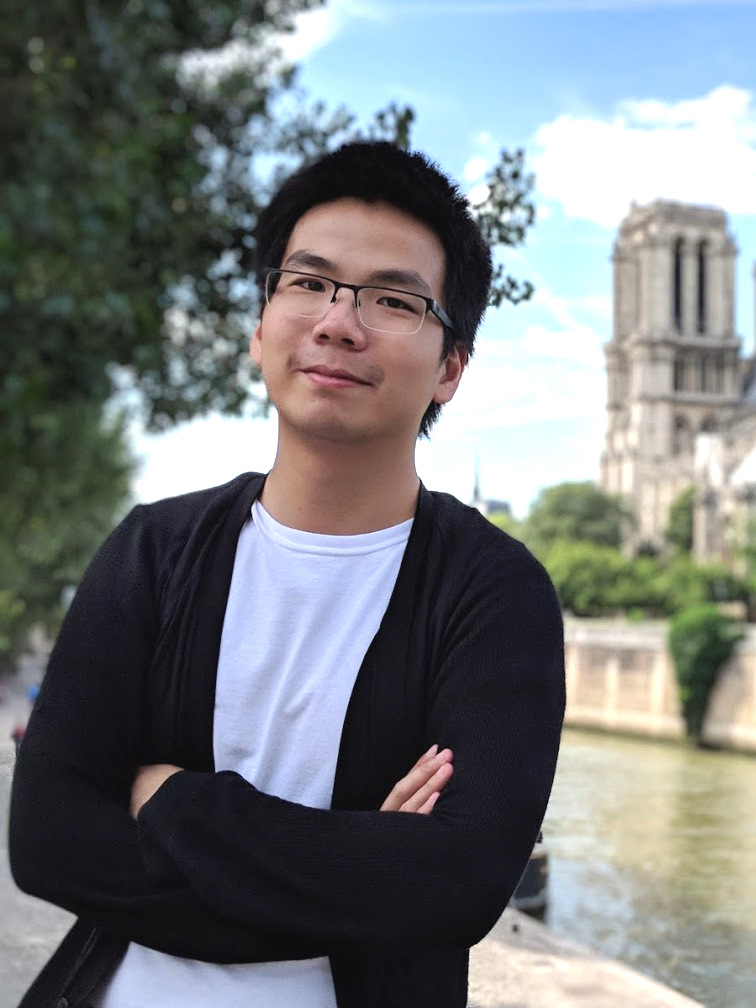
/ EXPERIENCE
01Amazon AGI — Applied Scientist, 2025–present
02Q.bio — Machine Learning Engineer through Staff Machine Learning Engineer & AI Research Lead, 2021–April 2025
03UCLA — Ph.D
04in Bioengineering, 2016–2021
/ ONE ARC
In medical imaging, the challenge was recovering useful structure from incomplete physical measurements.
In autonomous MRI, models moved inside a live scanner workflow, where inference speed and real-time decisions mattered as much as offline accuracy.
In frontier-model post-training, the work centers on the systems that create and maintain useful learning signals: environments, verifiers, curriculum, rollouts, reinforcement learning, and evaluation.
/ HOW I APPROACH THE WORK
01
Separate the intended capability from the benchmark, proxy, or failure that first exposed it.
02
Choose a unit of training and verification that makes the real bottleneck observable and changeable.
03
Connect research, runtime systems, and evaluation closely enough that the result can revise the next formulation.
/ EARLIER SYSTEMS
At Q.bio, I deployed 3D AI systems inside an autonomous MRI scanner, including components with sub-second inference for real-time localization and imaging decisions.
My earlier work in 3D MRI reconstruction, super-resolution, and segmentation has been cited more than 1,000 times.
I am a co-inventor on patent applications covering deep-learning MRI reconstruction and calcium-free CT angiography.
/ TRAINING
Ph.D. in Bioengineering from UCLA; M.S. degrees in Computer & Information Technology and Bioengineering from the University of Pennsylvania.
Outside work, running is the most durable rhythm in my life. The appeal is simple: steady effort compounds, conditions are never fully controllable, and progress has to survive contact with reality.