01
Define the capability
A benchmark gap is not automatically the capability gap.
AMAZON AGI · FRONTIER-MODEL POST-TRAINING
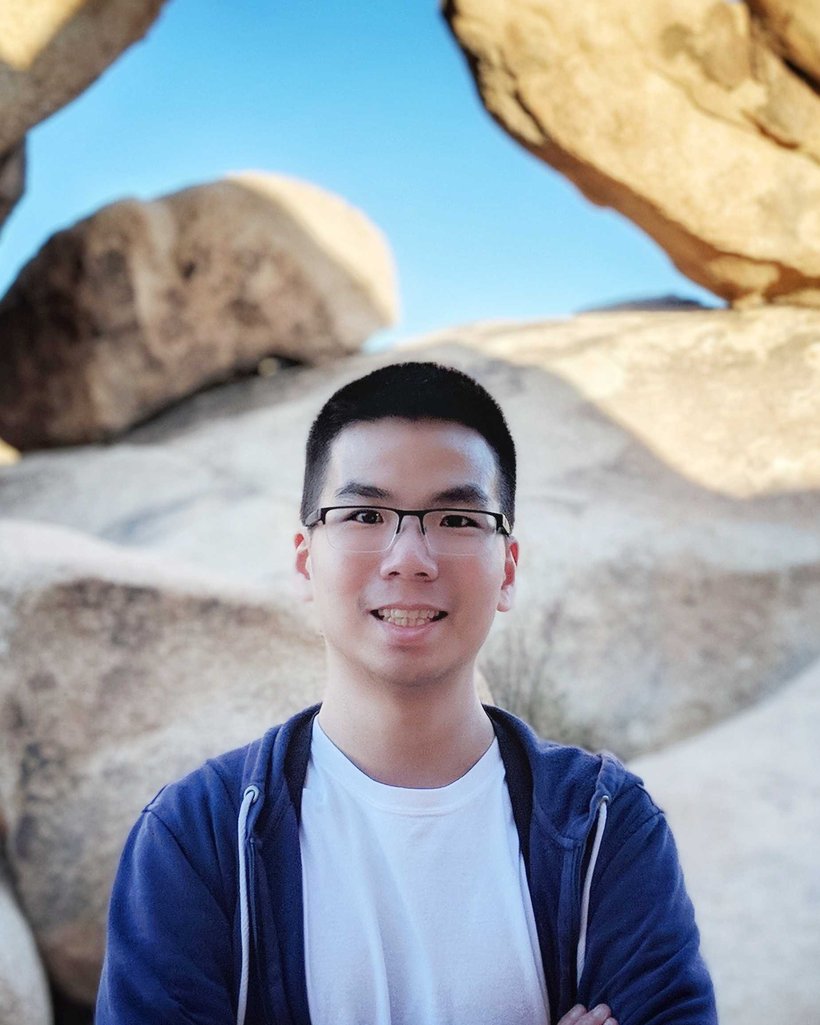
I am an Applied Scientist at Amazon AGI, working on frontier-model post-training. My work spans reasoning environments, verifiers, curriculum, rollout systems, reinforcement learning, and evaluation.
/ CAPABILITY ACQUISITION LOOP
01
A benchmark gap is not automatically the capability gap.
02
A difficult task is not automatically a useful learning task.
03
A correct checker is not automatically a trustworthy reward.
04
A fixed distribution does not stay informative as the policy changes.
05
Reliability failures can change the experiment, not merely delay it.
06
A benchmark improvement is not automatically capability acquisition.
/ REFORMULATE
Evaluation is useful when it changes the next formulation: what to train, what to verify, and which apparent gains deserve trust.
/ EARLIER PROOF · Q.BIO
At Q.bio, I deployed 3D AI systems inside an autonomous MRI scanner, including components with sub-second inference for real-time localization and imaging decisions.
My earlier work in 3D MRI reconstruction, super-resolution, and segmentation has been cited more than 1,000 times.
I am a co-inventor on patent applications covering deep-learning MRI reconstruction and calcium-free CT angiography.
/ THE THROUGH-LINE
Across medical imaging and frontier-model post-training, my work has followed the same pattern: identify where the current formulation breaks down, redefine the problem around the real bottleneck, and build the full system needed to test the new formulation in practice.ABOUT THE ARC →
/ CONTACT